

Your thermostat is set to cool, the outdoor unit is humming, and you can feel air moving through the vents. Yet the rooms in your Oxnard home stay warm and sticky. An AC running but not cooling is one of the most frustrating problems a homeowner faces during a coastal heat spell, partly because everything looks like it should be working fine. The encouraging news is that the cause is usually identifiable, and several of the most common reasons are things you can check yourself before a technician ever sets foot in your home.
Below are the real reasons your system keeps running without lowering the temperature, starting with the quick fixes and moving toward the issues that need a licensed pro.
Key Takeaways
- An AC that runs constantly but never cools almost always points to an airflow problem, a refrigerant problem, or a component that has failed while the rest of the system keeps operating.
- The fastest checks are free: confirm thermostat settings, replace a clogged filter, and clear debris away from the outdoor unit.
- A frozen evaporator coil and low refrigerant are two of the most common culprits behind warm air, and both often trace back to neglected maintenance.
- If your system blows warm air, ices over, or trips the breaker, shut it off and call a professional rather than running it longer.
- Oxnard’s marine-layer humidity and summer heat put steady strain on cooling systems, so small issues escalate faster here than in drier inland areas.
Running and Cooling Are Not the Same Thing
It helps to understand what “running” actually means. When your AC runs, the blower fan and the outdoor compressor are drawing power and moving air. Cooling is a separate job. It depends on refrigerant absorbing heat at the indoor evaporator coil and releasing it outside through the condenser coil. The fan can spin all day, but if that heat-transfer cycle is interrupted at any point, the air reaching your vents will be room temperature or barely cool.
So an AC running but not cooling is really telling you that air is still circulating while the heat-removal process has stalled. The trick is figuring out where it stalled. Pinpointing the break in that cycle is what separates a five-minute fix from a service call.
Start With the Thermostat
Before assuming the worst, rule out the simplest cause. A thermostat set to “fan on” instead of “auto” will blow air continuously without triggering the cooling cycle, which feels exactly like a system that runs but does not cool. Confirm the mode is set to “cool,” the temperature is several degrees below the current room reading, and the fan is on “auto.”
Dead or weak batteries, a tripped program schedule, or a thermostat mounted in direct sunlight can all send the wrong signal to your equipment. If your thermostat is older or unreliable, a smart thermostat gives you clearer control and accurate room readings, which removes a lot of guesswork from moments like this. Run through a few simple checks first so you are not paying for a visit that turns out to be a battery swap.
A Dirty or Clogged Air Filter
A restricted air filter is the single most common reason a system runs without cooling well. As the filter loads up with dust, pet hair, and pollen, it chokes the airflow across the evaporator coil. Less air moving over the coil means less heat gets removed, so the rooms stay warm even though the unit is working hard.
Most filters need attention every 30 to 90 days, and homes near the coast with open windows tend to clog faster. A severely blocked filter can also drop the coil temperature low enough to cause icing, which makes the problem worse. Building a habit of changing your air filter regularly is the cheapest insurance against weak cooling.
A Frozen Evaporator Coil
If you pull the filter and notice frost or a block of ice on the indoor coil or the copper lines, you have found a major cause of warm air. A frozen ac coil cannot absorb heat, so the system keeps running while delivering little to no cooling. Ironically, ice buildup is a sign the system is too cold in the wrong spot, usually because airflow dropped or refrigerant is low.
Turn the system to “fan only” or shut it off completely and let the ice melt fully, which can take several hours. Running a frozen unit risks damaging the compressor, an expensive part to replace. Once it thaws, replace the filter and restart. If it freezes again, the underlying cause has not been resolved and you will want a technician to inspect it.
Low or Leaking Refrigerant
Refrigerant is the substance that carries heat out of your home, and your AC does not consume it the way a car burns fuel. If the level is low, there is a leak somewhere in the system. An AC low on refrigerant will run and run while blowing warm or only slightly cool air, and you may notice hissing sounds, ice on the lines, or a sharp rise in how long the unit runs.
Refrigerant work is not a homeowner task. It requires EPA certification, specialized gauges, and proper leak detection. Topping off without finding the leak only buys a few weeks. Scheduling professional air conditioning repair ensures the leak is located, sealed, and recharged to the manufacturer’s specification.
A Dirty Condenser or Blocked Outdoor Unit
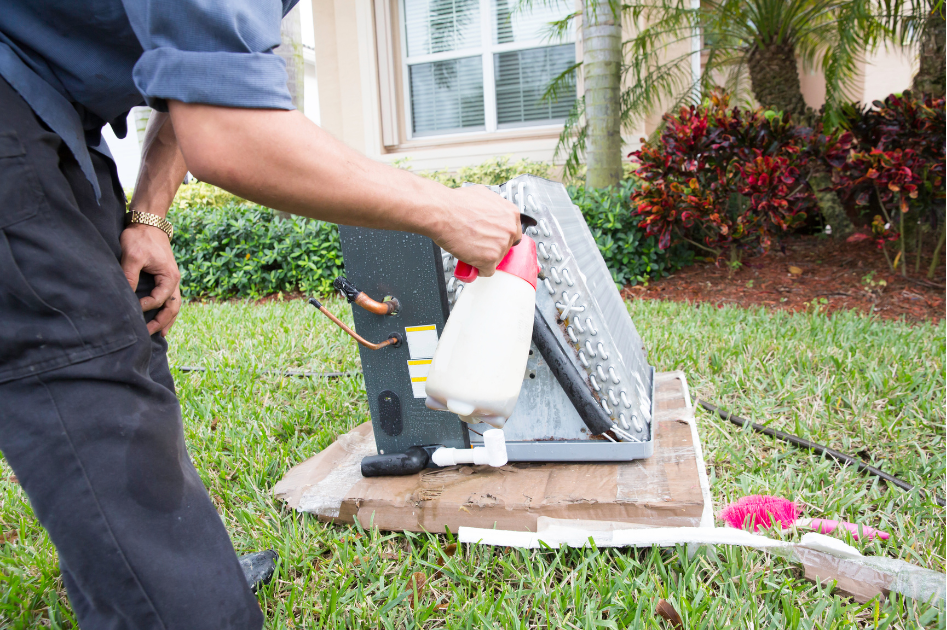
Your outdoor condenser unit releases the heat your system pulls from inside. If its coil is caked with dirt, grass clippings, or cottonwood fluff, or if shrubs and fencing crowd it, the heat has nowhere to go. The result is an AC running but not cooling because it cannot complete the cycle outdoors.
Keep at least two feet of clearance around the unit and gently rinse the exterior fins with a garden hose when they look dirty. Avoid pressure washers, which bend the delicate fins. A condenser that stays caked despite cleaning, or one with a fan that will not spin, needs a closer look from a technician.
A Failing Capacitor, Compressor, or Electrical Issue
Sometimes the fan runs but the compressor does not. The capacitor is a small component that gives the compressor and fan motors the jolt they need to start. When it fails, you might hear a humming or clicking outside while warm air keeps coming inside. A failing compressor produces similar symptoms and is one of the most serious AC problems.
These are electrical repairs that should be handled by a trained professional, both for safety and to avoid misdiagnosing the part. If your breaker trips repeatedly when the AC kicks on, stop resetting it and shut the system down until it can be inspected.
Leaky or Undersized Ductwork
Even a perfectly functioning unit cannot cool well if the cooled air escapes before it reaches your rooms. Gaps, disconnected joints, or poorly insulated ducts in the attic let conditioned air leak into unconditioned spaces. You might notice some rooms cool while others stay warm, or that the system runs constantly without the whole house catching up.
This is a frequent reason an AC is not cooling the house enough rather than failing outright. Sealing and insulating ductwork restores the airflow path, and routine professional AC maintenance typically includes checking the duct system for these losses.
DIY Checks Versus When to Call a Pro
Knowing where the line falls saves you time and protects your equipment. A short rule of thumb:
Safe to check yourself:
- Thermostat mode, temperature setting, and batteries
- A dirty air filter that needs replacing
- Debris, plants, or clutter crowding the outdoor unit
- A tripped breaker (reset once; if it trips again, stop)
Call a professional:
- Frost or ice that returns after thawing
- Warm air paired with hissing, bubbling, or oily residue on the lines
- A humming outdoor unit with a fan that will not spin
- Repeated breaker trips
- Weak cooling that persists after the basic checks
If the system is more than 12 to 15 years old and struggles every summer, the smarter long-term move may be upgrading your air conditioner rather than repairing the same failures repeatedly. During a heat wave with no cool air at all, do not wait it out. Reach out for emergency AC service so the problem gets handled before it damages other components.
Frequently Asked Questions
Why is my AC running but not cooling my house?
The most common reasons are a clogged air filter, a frozen evaporator coil, low refrigerant from a leak, a dirty outdoor condenser, or a failed capacitor or compressor. The fan keeps moving air while one of these issues blocks the heat-removal process, so the air stays warm.
Can a dirty air filter really stop my AC from cooling?
Yes. A heavily clogged filter chokes airflow across the coil, which sharply reduces cooling and can even freeze the coil into a block of ice. Replacing the filter every 30 to 90 days is one of the easiest ways to keep your system cooling properly.
Why is my AC blowing warm air?
Warm air usually points to low refrigerant, a frozen coil, a tripped compressor, or a thermostat set to “fan” instead of “cool.” Check the thermostat and filter first, then shut the system down and call a technician if warm air continues.
Should I turn off my AC if it is running but not cooling?
If you see ice on the unit, hear unusual humming, smell anything burning, or the breaker keeps tripping, yes, turn it off. Running a struggling system can damage the compressor, which is among the costliest parts to replace.
How long should it take for my AC to cool my Oxnard home?
On a hot day a healthy system should lower the indoor temperature noticeably within an hour or so. If it runs for hours without making progress, or it never reaches the set temperature, something in the cooling cycle needs attention.
Is low refrigerant something I can fix myself?
No. Refrigerant handling requires EPA certification and specialized tools, and low levels always mean there is a leak that must be found and sealed. A certified technician should diagnose, repair, and recharge the system.
Get Your Oxnard Home Cool Again
When your AC is running but not cooling and the basic checks have not solved it, the comfort team at Pacific Aire is ready to help. Our technicians diagnose the exact cause, repair it right the first time, and get your Oxnard home back to comfort. Call (805) 919-8767 to schedule your service or schedule service online.
About Pacific Aire Home Services
Pacific Aire Home Services has served homeowners across Ventura County and the surrounding area for decades, providing trusted heating, cooling, and water heater service. From quick diagnostic visits to full system installations, the team brings hands-on experience and a commitment to lasting comfort to every Oxnard home. When cooling problems strike, you have a local expert who knows exactly what the coast’s climate demands of your equipment.