

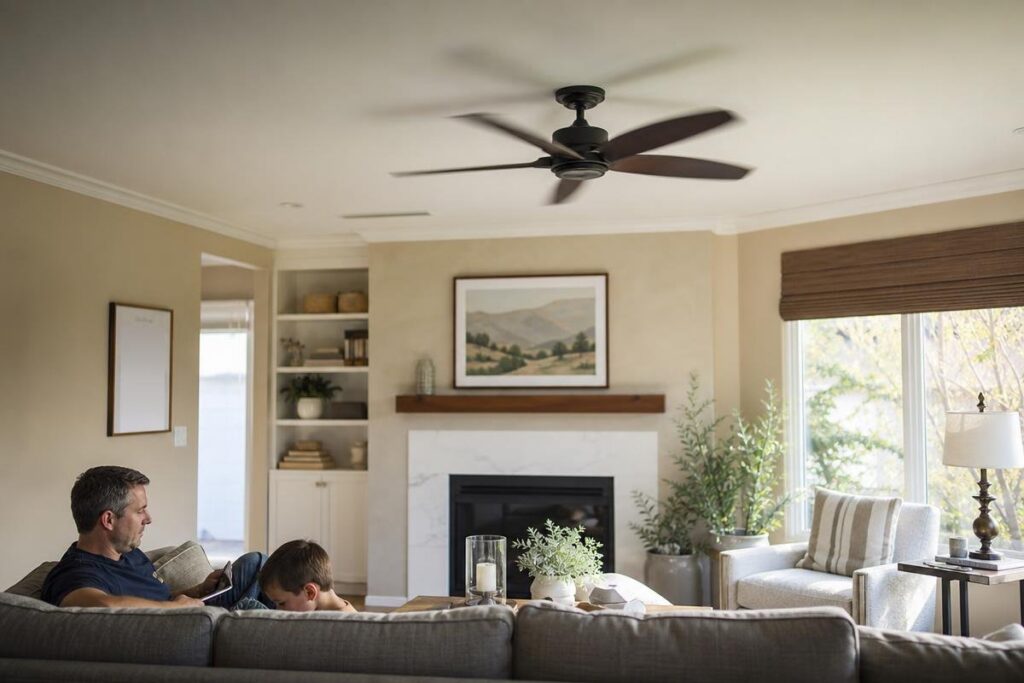
Camarillo afternoons can get surprisingly warm once the marine layer burns off, and a ceiling fan set in the wrong direction makes a hot room feel even worse. Most homeowners don’t realize that ceiling fan direction is the difference between a room that feels cool and one that just pushes warm air around. Pacific Aire Home Services is based in Oxnard and works throughout Camarillo, so we see this problem in local homes all the time.
We’ll walk through 6 common ceiling fan mistakes and show you exactly how to fix them, so your home stays comfortable all summer without leaning harder on your AC.
Key Takeaways
- Ceiling fan direction should be counterclockwise in summer to push cooler air down toward you.
- Switching your fan to clockwise in winter recirculates warm air trapped near the ceiling.
- Fan speed matters too: high speed in summer, low speed in winter for best results.
- Wrong fan size or mounting height for your room reduces airflow even when direction is correct.
- Acting early on ceiling fan mistakes can lower your AC workload and save you money on energy bills.
Why Your Ceiling Fan Might Be Working Against You
It’s a warm July afternoon in Camarillo. The morning haze cleared by noon, temperatures climbed into the upper 80s, and your ceiling fan has been spinning for hours. But your living room still feels stuffy. Sound familiar?
Before you blame the fan or crank the AC lower, the fix might be simpler than you think. Most ceiling fans are making at least one small mistake that kills their cooling effect. The good news: several of these are free to correct right now.
We’ll walk through 6 ceiling fan mistakes that are quietly making your rooms feel hotter than they should. Ceiling fan direction tops the list, and it’s one of the most overlooked settings in homes from Old Town Camarillo to the Mission Oaks tracts. Read on to learn what to check first.
Mistake 1: Running Your Fan in the Wrong Direction for the Season
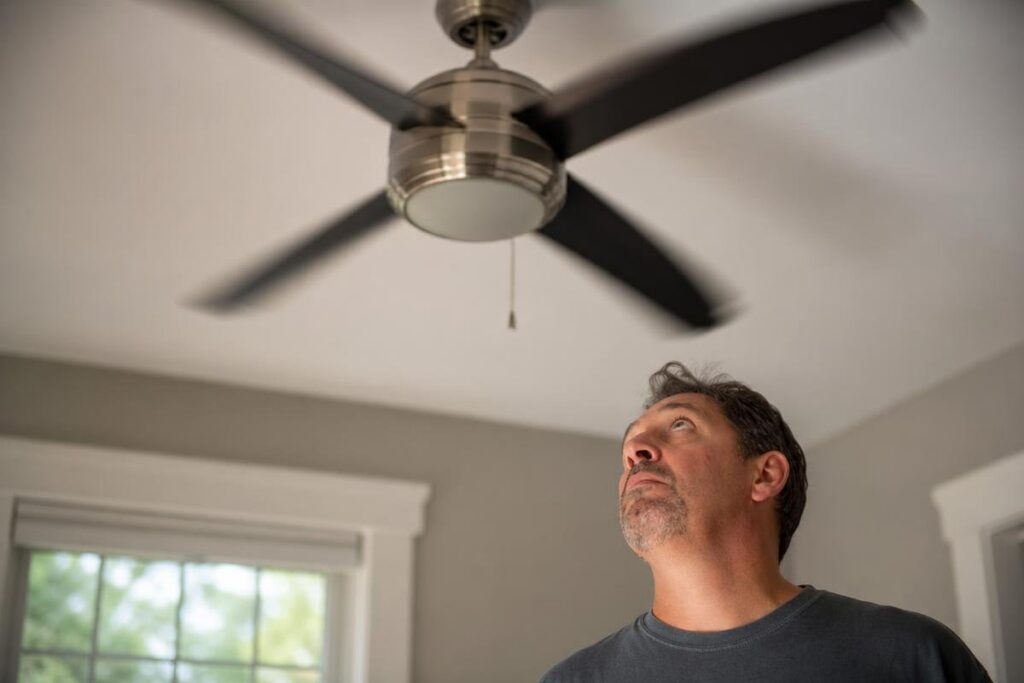
Your ceiling fan has a small switch on the motor housing that most people never touch. That switch controls which way the blades spin, and running it the wrong direction can make a room feel warmer than it actually is. This is one of the most common ceiling fan mistakes we see in homes across Ventura County.
Summer: Blades Should Turn Counterclockwise
In summer, set your ceiling fan to spin counterclockwise when viewed from below. That direction pushes air straight down toward you, creating a wind-chill effect against your skin. The fan does not actually lower the room temperature, but the moving air makes you feel several degrees cooler.
That effect is real enough to change how you use your AC. According to the U.S. Department of Energy, running a ceiling fan lets you raise your thermostat setpoint by about 4°F without a drop in comfort. Less AC runtime means lower energy bills. In the Camarillo area, where afternoon temperatures can climb into the 80s and 90s from May through October, getting this setting right matters most when the sun is highest.
Pair it with the rest of your strategy for keeping your home cool during a heat wave and you will get the most out of both your fan and your AC. Many homes in the 93010 and 93012 ZIP codes were built in the 1970s through 1990s, and the original ductwork in those homes does not always distribute conditioned air evenly. A fan set counterclockwise keeps air moving in rooms that feel stuffy even when the AC is running.
Winter: Blades Should Rotate Clockwise on Low
In winter, set your ceiling fan to spin clockwise on low speed. That direction pulls cool air up from the floor and pushes the warm air that has pooled near the ceiling back down along the walls. You feel the warmth without a direct breeze.
Camarillo winters are mild, with lows typically in the 40s and 50s from December through February. The clockwise setting is less critical here than in colder climates. But if your home has vaulted or high ceilings in the living room or great room, which is common in the larger Spanish Hills homes built during the 1980s and 1990s, the clockwise setting on low can make a noticeable difference in comfort without touching the thermostat.
Quick self-test: Stand under the fan while it runs. If you feel a breeze on your skin, it is set correctly for summer. If you feel nothing, it is in winter mode. That simple check tells you everything you need to know.
Mistake 2: Forgetting to Flip the Direction Switch When Seasons Change
Most people learn about ceiling fan direction once, nod, and then never think about it again. The switch gets flipped once and stays there for years. You are definitely not alone in this.
In Ventura County’s coastal climate, the timing matters more than you might expect. Afternoons in July and August can push into the high 80s and 90s inland, even after a cool, overcast morning. If your fan is still spinning clockwise from the previous winter, it is pulling air up instead of pushing a cooling breeze down. That makes the room feel warmer, not cooler.
Where Is the Direction Switch?
Look at the motor housing, the round body of the fan where the blades attach. On most fans, there is a small toggle or slider switch on the side of that housing. Newer fans may use a remote or wall control to change direction instead of a physical switch.
How to Change It Without Any Trouble
- Turn the fan off completely.
- Wait for the blades to stop moving.
- Locate the switch on the motor housing and slide or flip it the opposite direction.
- Turn the fan back on at low speed and confirm the blades now turn counterclockwise, then read our tips on improving indoor air quality before spring.
Tie this habit to something you already do twice a year, like changing smoke detector batteries. Flip to counterclockwise in April or May as warm afternoons arrive, and back to clockwise in November when the season shifts.
Mistake 3: Running the Fan at the Wrong Speed
Direction gets most of the attention, but speed matters just as much. Running your fan at the wrong speed for the season can cancel out the benefit you’re trying to get, and quietly add to your electricity bill in the process.
Summer: Medium to High Speed
In summer, you want the fan spinning counterclockwise at medium or high speed. That faster rotation drives more air straight down and strengthens the wind-chill effect described in Mistake 1, so you feel cooler without touching the thermostat. If you’re doing any seasonal AC tune-up and maintenance to stretch your cooling system further, pairing it with the right fan speed makes a real difference on the hottest afternoons.
Low speed in summer barely moves enough air to matter. You end up with a fan running and a room that still feels stuffy.
Winter: Low Speed Only
In winter, the fan should spin clockwise at low speed. That gentle reverse rotation pulls cool air up and pushes warm air that collects near the ceiling back down along the walls. It’s subtle, but it helps in rooms with vaulted ceilings.
High speed clockwise is where people go wrong. Instead of redistributing warm air, it creates a cold downdraft that blows directly onto whoever’s sitting below. In Thousand Oaks and Simi Valley, where winter nights get colder, that’s a real comfort problem. In the Camarillo area, where December lows sit in the 40s and 50s, it’s still uncomfortable enough to notice.
The fix is simple: low speed in winter, medium to high in summer. That one adjustment costs nothing and works immediately.
Mistake 4: Using a Fan That’s the Wrong Size for the Room
A fan that’s too small for the room barely moves air. You feel almost nothing standing under it. A fan that’s too big in a small space creates choppy, uncomfortable turbulence that makes the room feel chaotic instead of cool. Either way, you’re wasting electricity and getting none of the benefit.
Match Blade Span to Square Footage
Here’s a simple sizing guide to start with:
- Up to 75 sq ft (small bathroom, closet area): 29 to 36 inch blade span
- 76 to 144 sq ft (small bedroom): 36 to 42 inch blade span
- 145 to 225 sq ft (average bedroom or den): 44 to 50 inch blade span
- 225 to 400 sq ft (large living room): 50 to 54 inch blade span
- Over 400 sq ft (great room, open floor plan): 60 inch or multiple fans
Many tract homes in the Springville and Mission Oaks areas have bedrooms around 120 to 150 square feet and living areas that push 300 square feet or more. That means the same fan size rarely works in every room of the house.
Don’t Forget Ceiling Height
Blades should hang 8 to 9 feet above the floor for the best airflow. Homes built in Ventura County during the 1980s and 1990s often have standard 8-foot bedroom ceilings and 10 to 12-foot ceilings in living areas and great rooms. That taller space needs a longer downrod to bring the blades down to the right height. Without it, the fan spins up near the ceiling and the cooling breeze never really reaches you.
Most homeowners pick the right fan but skip the downrod entirely. That one oversight kills the ceiling fan direction benefit you were counting on. Not sure your fan is sized right for your room? Schedule a quick assessment with Pacific Aire Home Services. Call us at (805) 919-8767 and we’ll point you in the right direction.
Mistake 5: Leaving Fans On in Empty Rooms
This one surprises a lot of people. A ceiling fan does not lower the temperature in a room. It only makes you feel cooler while you are standing in the breeze. The moment you leave the room, that benefit disappears. Nobody is there to feel it.
Running a fan in an empty bedroom does not make the room cooler for when you return. It just burns electricity. The motor also gives off a small amount of heat, so your AC in Thousand Oaks or Oxnard actually works a little harder to compensate. You are paying for a comfort benefit that no one is receiving.
During afternoon peak-rate hours in summer, this habit adds real cost with zero payoff. Think of your ceiling fan the same way you think of a light. Off when you leave. On when you come back.
If you find yourself forgetting, a smart fan control or timer takes care of it automatically. Many are easy to install and pair with existing switches. If you want help choosing the right controls for your home, our team covers electrical services across the area. You can also check our current offers for ways to save on upgrades like these.
Mistake 6: Skipping Blade Cleaning and Balance Checks
Dirty blades are one of the most overlooked reasons a ceiling fan stops doing its job. Dust builds up on the leading edge of each blade, and even a moderate layer can cut the cooling breeze you feel in the room. If you live near the agricultural areas around Camarillo, Oxnard, or the Oxnard Plain, that buildup happens faster than you might expect.
Dust also creates uneven weight across the blades. That uneven weight causes wobble, which puts stress on the motor and creates that annoying hum you hear at higher speeds. Wobble and noise are signs your fan is working harder than it needs to. That extra strain can shorten the fan’s life and reduce indoor air quality in your home by circulating settled dust back into the air.
Here is the easiest cleaning method we know. Slide an old pillowcase over each blade and pull it back slowly. The pillowcase traps the dust instead of knocking it onto your furniture and floor. Plan to do this every four to six weeks during heavy-use months, roughly May through October.
If the wobble continues after cleaning, check the blade bracket screws first. Loose brackets are a common cause that gets overlooked.
Most fans also come with a small balancing kit, a set of clip weights you attach to the blade to correct the heavy side. Clip one weight at the center of a blade, run the fan, and move it until the wobble stops. It takes about ten minutes and makes a real difference.
How Ceiling Fan Direction Fits Into Your Camarillo Home’s Cooling Strategy
Fixing all six fan mistakes helps, but ceiling fan direction is just one piece of a bigger picture. In the coastal valley climate that covers Camarillo, Thousand Oaks, and Oxnard, afternoon temperatures can climb 20 to 30 degrees above the cool morning marine layer. That daily swing puts real pressure on your AC during peak hours.
A correctly set fan, spinning counterclockwise at medium-high speed in summer, lets you raise your thermostat setpoint several degrees without feeling the difference. That directly cuts AC runtime and trims your energy bill. Ceiling fan direction summer settings matter most between noon and early evening, when the sun is hammering west-facing rooms and your system is working hardest.
Homes built in the 1970s through 1990s, which make up a large share of the housing stock in neighborhoods across this part of Ventura County, often have original ductwork that pushes conditioned air unevenly. Some rooms get plenty of cool air. Others feel stuffy no matter what the thermostat says. Ceiling fans help compensate by keeping air circulating in those problem rooms. If you want to go further, our post on everything about air duct cleaning explains how dirty ducts make that imbalance worse.
If a room still feels hot after you have corrected the ceiling fan counterclockwise during summer rotation, adjusted the speed, and cleaned the blades, the fan is not the problem anymore. The issue is likely your HVAC system, ductwork, or attic insulation. Our guide on why your home feels hotter than the thermostat says covers exactly that situation. You can also check for 9 signs of poor duct sealing that could be undermining your whole cooling setup.
Pacific Aire Home Services is based in Ventura at 301 Todd Ct in Oxnard and serves Camarillo and the surrounding cities daily. We know the local construction styles and the climate conditions that come with living this close to the coast, and we back our work with a satisfaction guarantee. Fans and HVAC work best together, and we can help you get both dialed in.
Frequently Asked Questions
Which direction should a ceiling fan spin in summer?
In summer, your ceiling fan should spin counterclockwise when viewed from below. That direction pushes air straight down, creating a wind-chill effect on your skin. You can confirm it’s right by standing under the fan and feeling a noticeable breeze. If you feel nothing, the blade direction is likely reversed.
Which direction should a ceiling fan spin in winter?
In winter, set your fan to spin clockwise at a low speed. This pulls cool air up and pushes warm air that collects near the ceiling back down along the walls. It’s most useful in rooms with ceilings above 9 feet, which is common in the vaulted living areas found in many Oxnard and Thousand Oaks homes.
Does ceiling fan direction actually make a difference?
Yes, it makes a real difference. According to the U.S. Department of Energy, running a fan in the correct summer direction lets most homeowners raise their thermostat setpoint by around 4°F without feeling warmer. That means your AC runs less during peak afternoon hours, which is exactly when energy rates tend to be highest.
How do I know if my ceiling fan is spinning the right way?
Stand directly under the fan while it runs. In summer mode, you should feel a cool breeze pushing down on you. If the air feels still or you notice no cooling effect, flip the small direction switch on the motor housing and test again.
Can a ceiling fan help reduce my AC bill in Thousand Oaks or Oxnard?
It can, as long as the fan is the right size for the room, spinning the correct direction, and set to an appropriate speed. The thermostat raise is where the real savings come from. Running your AC less during peak hours adds up quickly over a long summer.
What if my room still feels hot even with the fan on the right setting?
Correct fan direction is one piece of the puzzle, not the whole solution. Older ductwork, undersized equipment, or poor airflow distribution can all keep a room hot regardless of fan settings. If a specific room stays stuffy no matter what, it may be worth looking into HVAC zoning for your home’s climate as a longer-term fix.
Still have a room that stays hot no matter what? Call Pacific Aire Home Services at (805) 919-8767. Our team serves Camarillo, Ventura, Oxnard, and the surrounding area and can diagnose why your home isn’t cooling the way it should.
Ready to Get Started with Pacific Aire Home Services?
Call (805) 919-8767 to speak with our team directly. We’re ready to answer your questions, walk you through your options, and help you find the right solution for your needs. Whether you’re just starting to plan or ready to move forward, we’ll make the process simple and stress-free.
Reach out today and let’s talk about how we can help.