
Your AC is running, but some rooms still feel stuffy and hot. In Camarillo, where attics can hit extreme temperatures on warm afternoons, poorly sealed ducts are one of the most common reasons homes stay uncomfortable no matter how hard the system works. We’ll walk through 9 signs that duct sealing may be overdue in your home, so you can act early and stop paying to cool air that never reaches you. Suspect leaky ducts are making your home harder to cool? Schedule a duct inspection today.
Key Takeaways
- Leaky ducts can waste up to 30% of conditioned air before it reaches your living spaces.
- Many Camarillo homes built in the 1970s through 1990s used standard duct tape that has long since dried out and failed.
- Poor duct sealing drives up energy costs, creates hot and cold spots, and pulls dust and allergens into your air supply.
- Modern duct sealing methods, including Aeroseal, can fix leaks from the inside without major teardown of your walls or ceilings.
- Catching duct problems early protects your HVAC system from overworking and helps keep repair costs down.
Why Camarillo Homes Feel Hot Even With the AC Running
Your thermostat says 72 degrees. But walk down the hall to the back bedroom and it feels like a different house. The AC has been running for hours, your energy bill keeps climbing, and nothing seems to fix it. That is a classic sign of leaky air ducts, and it is more common in Ventura County homes than most people realize.
According to Energy Star, leaky ducts waste 20 to 30 percent of conditioned air before it ever reaches your living spaces. That air is leaking into your attic or crawlspace instead of cooling your home. You pay for it anyway. If you have ever wondered why your energy bills stay high no matter what you do, ductwork energy loss is often the reason nobody talks about.
Camarillo’s climate makes this worse. Cool marine mornings give way to warm afternoons fast. Add Santa Ana wind events and daily thermal cycling, and duct joints take a beating year after year. Pacific Aire Home Services has worked on ductwork across Camarillo and the surrounding Ventura County tracts for years, and this pattern comes up again and again in older homes.
We will walk through 9 warning signs that duct sealing has failed in your home, so you know exactly what to look for before the problem gets more expensive.
What Duct Sealing Actually Does (And Why It Matters)
Duct sealing closes gaps, cracks, and loose joints in your ductwork so conditioned air reaches your living spaces instead of leaking into attics or crawl spaces. When those gaps go unsealed, a significant portion of the air your HVAC system conditions never makes it to your rooms. It bleeds into attics, wall cavities, and crawl spaces along the way.
Duct sealing is not the same as duct cleaning. Cleaning removes dust and debris from inside the ductwork. Sealing repairs the physical leaks in joints, seams, and connections. Both matter for indoor air quality, but they solve different problems.
How Duct Sealing Keeps Conditioned Air Moving
Think of your duct system like a garden hose. If the hose has holes along its length, water pressure drops before it reaches the end. Your ducts work the same way. The air your system conditions travels through a network of supply and return ducts, depending on the different types of HVAC systems homes use. Any gap along that path bleeds pressure and conditioned air before it reaches your rooms.
The result is a system that runs longer, works harder, and still leaves rooms feeling uncomfortable. Your energy costs climb while your comfort drops.
Why Duct Sealing Gaps and Cracks Are So Common
Homes built across Ventura County during the 1970s through 1990s were typically connected with standard cloth duct tape, not metal-foil mastic. That cloth tape dries out and fails within years. It was never built to last decades.
Even newer homes are not immune. Daily temperature swings in the area push metal duct materials through repeated cycles of expansion and contraction. Attics in this region can reach 130 to 150 degrees on warm days, which degrades flex duct jackets and adhesive-based tape faster than most homeowners realize. Structural settling adds stress to joints over time. Acting early on leaky air ducts can save you money and stress before the damage compounds.
The 9 Signs Your Duct Sealing Has Failed
You don’t need a pressure gauge to suspect your ducts are leaking. Most homeowners notice something feels off long before they call anyone. Here are the nine signs that failing duct sealing is costing you comfort and money.
Sign 1: Some Rooms Stay Warm No Matter What
Back bedrooms and rooms at the end of long attic duct runs are the most common complaint we hear. Conditioned air leaks out before it ever reaches that far register. The room gets warm air, or barely any air at all. If you’ve adjusted vents and nothing changes, the duct run itself is the likely problem.
Sign 2: Your Energy Bills Keep Climbing
Leaky ducts force your system to run longer to hit the thermostat setting. Every extra minute of runtime adds to your bill, and over a full Ventura County cooling season those minutes stack up fast. If your cooling costs have crept up without a clear reason, that same energy loss is worth investigating. Read our tips on how to lower your energy bills this winter for more context on where energy goes in a typical home.
Sign 3: Weak Airflow at the Vents
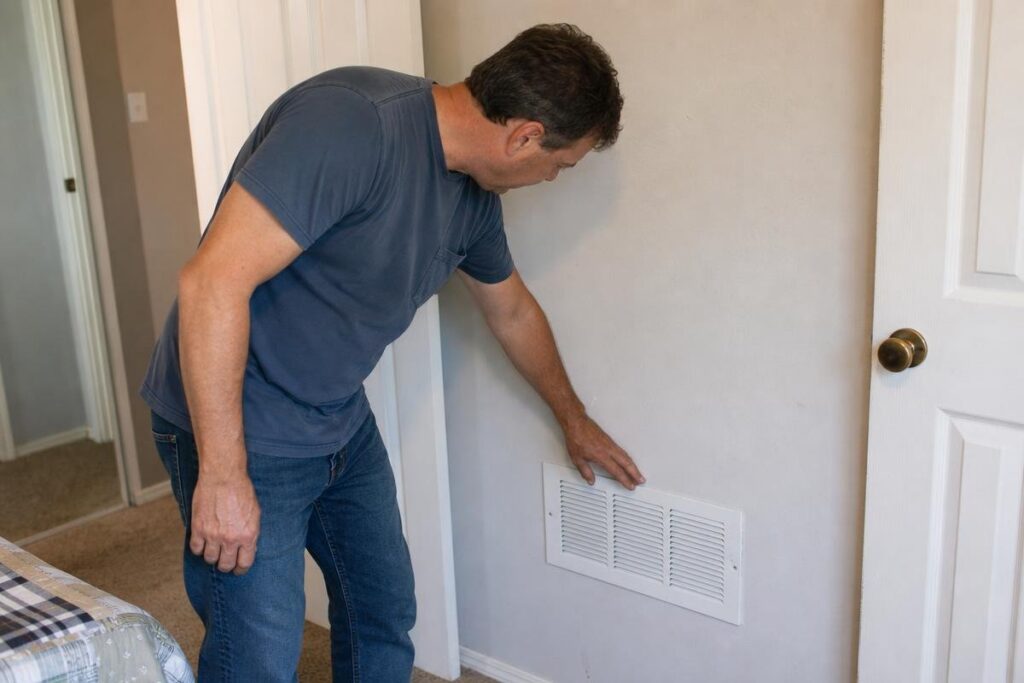
Hold your hand near a supply vent while the system runs at full capacity. If the airflow feels weak, air is likely escaping upstream in the duct run before it reaches that register. Weak airflow isn’t always a duct problem. A clogged filter or undersized system can cause it too. But if one or two specific rooms have noticeably less airflow than others, duct leaks are the most common cause.
Sign 4: Excess Dust on Surfaces and Registers
Leaky return ducts pull unconditioned attic air back into the system. That air carries dust, insulation fibers, and debris. You’ll notice it as a gray or brown ring around supply registers, or as surfaces near vents that need dusting more often than the rest of the room. This is also a sign your filter isn’t catching what it should, because that attic air is bypassing the filter entirely. Check out these 7 tips for cleaner indoor air and better sleep if dust buildup has been an ongoing issue.
Sign 5: The AC Runs Constantly Without Satisfying the Thermostat
The thermostat keeps calling for cooling because the system can’t hit the set point. Conditioned air is escaping into the attic instead of reaching the living space. Running nonstop like this accelerates compressor wear and shortens the life of your equipment. If your system runs for hours without the house cooling down, that’s a strong sign of air duct efficiency problems.
Sign 6: You Can See Damaged or Disconnected Duct Sections
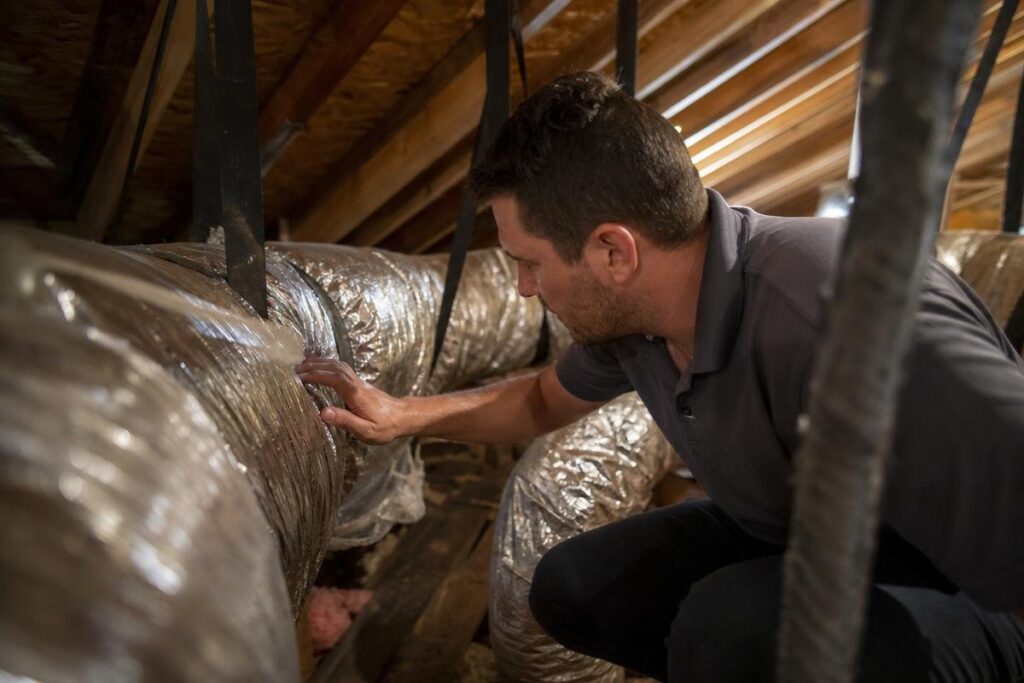
If you have attic access, take a look. Disconnected flex duct sections, crushed runs, or joints wrapped in old cloth duct tape are all signs of failed sealing. Standard duct tape was never rated for HVAC use and dries out within a few years, especially in the superheated attics common across Camarillo. Mastic sealant or metal-backed tape is what should be there instead.
Curious if Aeroseal can fix your ducts without tearing out drywall? Ask us how it works.
Sign 7: A Room That Used to Be Comfortable Has Changed
This is different from Sign 1. We’re talking about a room that cooled fine for years and recently stopped performing. That shift usually points to a new leak rather than a design flaw in the original duct layout. A joint may have separated from thermal cycling or physical stress. Pay attention to when the change started and whether it happened around the same time as unusually hot weather or a Santa Ana wind event.
Sign 8: Strange Odors Coming Through the Vents
Leaky return ducts near attic insulation pull in musty or dusty smells. If your return duct runs near a garage, gaps can pull in vehicle exhaust or chemical fumes. You may only notice the smell when the system first kicks on. That’s a clear sign unconditioned air is entering the duct system somewhere it shouldn’t be.
Sign 9: Worsening Allergies or Air Quality Inside the Home
Unsealed ducts let particulates, mold spores, and outdoor allergens bypass your air filter completely. In the Oxnard Plain and surrounding agricultural areas, pollen and dust loads run high during spring and dry-wind events. When return ducts have gaps, that outdoor air goes straight into your living space unfiltered. If household members have noticed more sneezing, congestion, or irritation indoors, failing duct sealing may be a contributing cause. Talk to our team about your indoor air quality options if this sign sounds familiar.
How Professionals Test and Seal Ducts for Better Duct Sealing
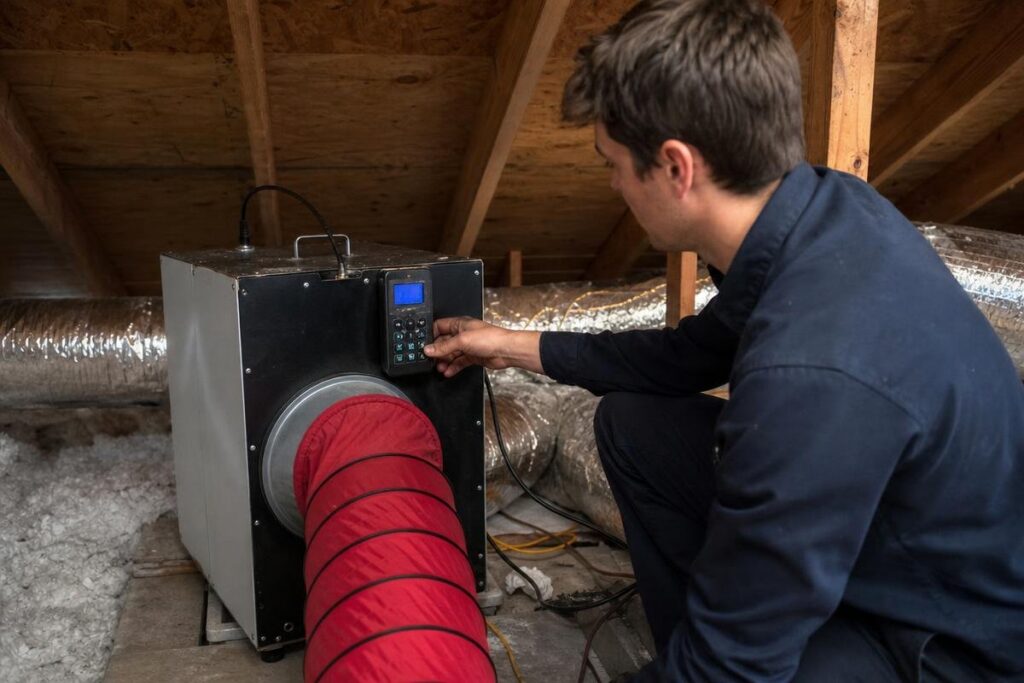
Finding leaky air ducts is not guesswork. Our team follows a clear diagnostic process before any sealing work begins, so you know exactly what you are dealing with and what the fix will actually accomplish.
Duct Blaster Testing
A duct blaster test pressurizes your entire duct system and measures how much air escapes. The result is a precise leakage percentage, not an estimate. That number tells us whether your ducts have a minor problem or a serious one.
After the blaster confirms leakage exists, we use smoke pencils or a thermal imaging camera to pinpoint the exact locations. In Ventura County attics that hit 130 to 150 degrees on warm days, long flex duct runs often have leaks spread across multiple joints. The test finds all of them at once.
Mastic Sealant and Metal-Foil Tape
For accessible duct connections, mastic sealant is the right material. It is a paste-like compound brushed directly onto joints and seams. It stays flexible after curing, which matters in attics where temperature swings stress duct connections daily.
On rigid duct sections, we apply UL 181-rated metal-foil tape. Neither mastic nor metal-foil tape is the gray cloth tape sold at hardware stores. That gray tape dries out and fails within a few years. Many homes in older Ventura County tracts were originally sealed with exactly that material, and it has long since given out. If you want to lower your energy bills through more efficient heating and cooling, proper sealant materials are where it starts.
Aeroseal for Hard-to-Reach Duct Runs
Some ducts run through finished ceilings or interior walls. Reaching them with mastic means tearing out drywall. Aeroseal solves that problem. It injects an aerosol-based polymer sealant into a pressurized duct system. Tiny particles float through the air stream and stick to leak edges from the inside, sealing gaps up to five-eighths of an inch in diameter. It reaches every section of the duct run, including spots no technician could physically access.
This matters in Camarillo specifically. Many two-story homes in areas like Spanish Hills and the newer developments off Las Posas Road have supply runs buried in interior ceilings, where mastic simply cannot reach without demolition. Aeroseal seals those runs from the inside with no teardown. For homes where return ducts have unsealed gaps pulling in dust and pollen, it also helps improve indoor air quality before seasonal allergens make it worse.
Think your ducts might be leaking? Our team can test and seal HVAC ducts the right way. Call us at (805) 919-8767 to schedule a diagnostic.
What Happens After Duct Sealing: Real Benefits for Your Home
Most homeowners notice a difference within the first few days after sealing. The system stops fighting itself. Conditioned air actually reaches the rooms it was meant to reach, instead of bleeding out into a 140-degree attic.
Lower Energy Bills
Ductwork energy loss is one of the biggest hidden drains on a cooling system. When leaks are sealed, your AC hits the thermostat set point faster and cycles off sooner. That means fewer long run cycles and a lower monthly bill.
This matters a lot along the coast. Camarillo’s marine layer burns off by midday, and afternoons push systems hard for months. A sealed system handles that load more efficiently than one losing air to the attic. Acting early also protects the compressor from the extra wear that builds up over years of overworking, which is one of the main reasons systems fail ahead of schedule.
Read our guide on when to upgrade your home HVAC system if you’re wondering whether sealing is enough or if replacement is closer than you think.
More Consistent Comfort
Back bedrooms and rooms at the end of long duct runs are usually the first to feel the improvement. Those spaces struggled because they were last in line when air was leaking out along the way. After sealing, airflow reaches them reliably. You stop adjusting the thermostat trying to compensate. The whole house settles into a more even temperature, which is what air duct efficiency is supposed to deliver in the first place.
Cleaner Air Throughout the Home
Leaky return ducts pull in whatever is in your attic or wall cavities, including dust, insulation particles, and pollen. Ventura County’s agricultural surroundings and seasonal Santa Ana winds make that a real concern. Sealed ducts mean your air filter actually processes all the air moving through the system, not just a portion of it.
Duct sealing also pairs well with upgraded filtration or UV light purification if you want to go further. Start with how to improve indoor air quality before spring makes it worse for a practical next step.
Why Camarillo Homes Are Especially Prone to Duct Leaks
If you live in the Springville or Las Posas Estates areas, your home was likely built somewhere between the 1970s and 1990s. That means your ductwork is 30 to 50 years old. Builders back then used standard cloth duct tape to seal connections, not mastic sealant. That tape has long since dried out, cracked, and pulled away from the joints.
Leaky air ducts in these older tracts are extremely common, and many homeowners have no idea. The same holds true for many of the tract homes in Camarillo Heights, where original ductwork often has never been touched since construction.
Camarillo’s climate makes things worse. Every day, cool marine air rolls in from the coast in the morning, then temperatures climb through the afternoon. That daily thermal cycling causes duct joints to expand and contract repeatedly over years. Add Santa Ana wind events into the mix, and you get rapid temperature and humidity swings that stress connections even further. Over time, those joints work themselves loose. That slow process is one of the most overlooked causes of ductwork energy loss in this area.
Then there’s the attic. On a warm Camarillo afternoon, attic temperatures can hit 130 to 150 degrees Fahrenheit. At that heat, the outer jacket on flex duct degrades faster than most people expect. Adhesive-based tape fails even quicker. The result is gaps in your duct system that pull in superheated attic air instead of delivering conditioned air to your rooms.
Proximity to the agricultural areas near the Las Posas Road corridor also matters. Higher ambient dust and pollen loads in the air mean that when your return ducts have unsealed gaps, that particulate gets pulled straight into your living space. If you want to understand how that affects your family’s air, our guide on how to improve indoor air quality before spring makes it worse covers it well.
Frequently Asked Questions
What Is the Difference Between Duct Sealing and Duct Cleaning?
Duct cleaning removes dust, debris, and biological buildup from inside the duct interior. Duct sealing addresses physical gaps, cracks, and failed connections in the duct structure itself. Many homes need both. We recommend cleaning first so the sealing materials bond to clean surfaces.
Can I Seal My Own Ducts or Do I Need a Professional?
Accessible joints in your attic can be treated with mastic or UL 181-rated metal-foil tape by a capable DIYer. Leaks inside walls or deep in your duct runs are a different story. Those require a duct blaster tester or Aeroseal injection equipment to locate and fix properly. If you are not sure where the leaks are, a professional inspection is the right starting point.
How Much Does Duct Sealing Cost?
Cost depends on your home’s size, the number of leaks, and the method used. We give you a clear estimate before any work begins. No guessing, no surprises.
How Long Does Duct Sealing Last?
Mastic and metal-foil tape, properly applied, can last the life of the duct system, often 20 years or more. Aeroseal is tested to last over 40 years per manufacturer data. Either way, you are not looking at a repair you will need to repeat every few years.
Will Duct Sealing Fix My Uneven Heating and Cooling?
Leaky air ducts are one of the most common causes of uneven comfort, but not always the only one. Undersized equipment, blocked vents, or poor duct design can also play a role. If you are also dealing with hot spots room to room, it is worth reading about efficient home heating solutions to lower your energy bills while we diagnose the root cause during your inspection.
What Areas Does Your Team Serve?
Our team serves Oxnard, Thousand Oaks, Moorpark, Simi Valley, Newbury Park, Santa Barbara, and the surrounding region. Our office is located at 301 Todd Ct, Oxnard, California, 93030.
If two or three of these signs sound familiar, your ducts are worth a professional look. Contact Pacific Aire Home Services to schedule a duct inspection in your area. Call us at (805) 919-8767. We will tell you exactly what we find and give you a clear estimate before any work begins. No guessing, no pressure.
Ready to Get Started with Pacific Aire Home Services?
Call (805) 919-8767 to speak with our team directly. We’re ready to answer your questions, walk you through your options, and help you find the right solution for your needs. Whether you’re just starting to plan or ready to move forward, we’ll make the process simple and stress-free.
Reach out today and let’s talk about how we can help.