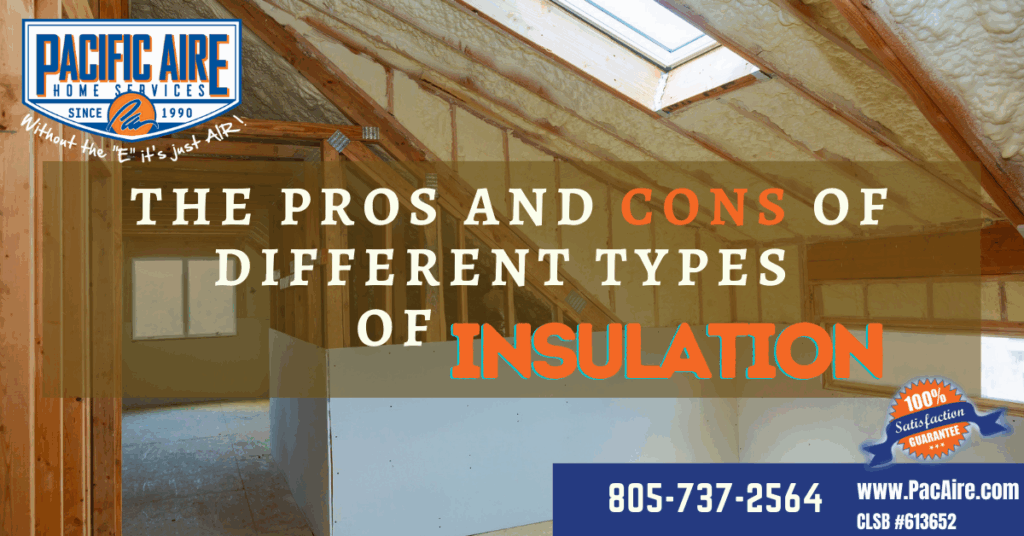
Thinking about adding insulation to your home? The type you choose makes a big difference—not just for comfort, but for long-term savings and efficiency. Insulation is one of the biggest factors in how well your home holds heat in the winter and keeps it out in the summer. Choosing the right material helps control energy costs, improves indoor air quality, and protects your HVAC system from overworking.
With comfort and cost on the line, it’s important to weigh the pros and cons of each type of insulation before making a choice.
What Is Insulation—and Why Does it Matter?
Insulation is a material installed in your home’s walls, attic, floors, or ceilings to slow the flow of heat between your indoors and the outdoors. Its purpose is to help your home keep a comfortable temperature year-round—warm in the winter and cool in the summer—while reducing the energy your HVAC system uses.
Insulation effectiveness is measured by R-value, which indicates how well a material resists heat flow. The higher the R-value, the better the insulation slows heat transfer, helping your home stay comfortable and energy-efficient. Different materials and insulation types provide different R-values, so understanding both is key to making the right choice for your home.
How Heat Moves Through Your Home
Even with proper insulation, some heat can still escape your home. Heat transfer is where warmth moves from hotter areas to cooler areas. It happens in several ways—through conduction (direct transfer through materials), convection (through moving air or fluids), and radiation (through electromagnetic waves).
Thermal Bridging and Why Conduction Matters for Insulation
While all three play a role, conduction is especially important in understanding insulation. In a home, conduction can create a hidden source of energy loss: when heat passes more easily through structural elements like wood or metal studs and joists, it can bypass the insulation. This direct flow of heat through framing is called thermal bridging.
That’s why the quality of installation and the choice of insulation type and materials are so important. If insulation fits snugly and is made from materials that slow down heat flow, it can reduce thermal bridging and help your home stay comfortable while using less energy.
Common Types of Insulation and How They Compare
When researching insulation, you’ll often see two kinds of terms: materials and types. Materials are what the insulation is made from—like fiberglass, cellulose, cotton, mineral wool, or foam. Types describe how those materials are installed in your home—whether as batts or blankets, blown-in loose fill, spray foam, rigid boards, or radiant/reflective barriers.
Knowing both terms helps you compare options more clearly: the material affects things like cost, safety, and eco-friendliness, while the type affects where insulation can be placed, how deeply it can fill a space, and how airtight the coverage will be.
In this blog, we cover the most common types of insulation, along with their pros and cons.
Materials & Types of Insulation: a Quick Guide
| Material | Common Types | Notes |
|---|---|---|
| Fiberglass | Batts (blankets), blown-in loose fill, rigid panels/boards | Affordable, widely available, easy to install, and versatile; common in walls, attics, and floors. |
| Mineral Wool | Batts (blankets), rigid panels | Typically rock or slag wool; fire-resistant and durable; effective for sound control and high-heat areas. |
| Cotton / Wool | Batts | Natural fiber alternatives; sustainable choice with strong soundproofing. |
| Cellulose | Blown-in loose fill | Made from recycled paper; eco-friendly and effective for attics and retrofits. |
| Spray Foam | Open-cell spray, closed-cell spray | Expands to seal gaps; provides air barrier and high R-value; pro install only. |
| Rigid Foam | Foam boards (EPS, XPS, polyisocyanurate) | High R-value per inch; moisture-resistant; ideal for basements, roofs, and walls. |
| Reflective / Radiant Barriers | Foil sheets, installed in attics | Reflects radiant heat; best for hot climates with attic air gaps. |
Types of Insulation: Pros and Cons
Each type of insulation behaves differently depending on where it’s installed and how it’s applied. Some types fill irregular spaces, others fit neatly between studs, and some reflect heat rather than absorb it.
Knowing the strengths and limitations of each type helps you choose the best fit for your home, whether you’re insulating an attic, wall, or basement. Below, we break down the most common insulation types, along with their key pros and cons, so you can make a more informed decision.
Batts (Blanket) Insulation
Batts insulation is usually fiberglass, cotton, or mineral wool cut into rolls or sheets. It’s one of the most familiar and widely available insulation types.
Pros
- Affordable and easy to install
- Can include vapor barriers with facing options
Cons
- Gaps, holes, or poor fitting reduce effectiveness
- Fiberglass can irritate eyes, lungs, and skin
- Heat can still travel through framing and structural elements
Blown-In Insulation
Blown-in insulation, typically made of fiberglass or cellulose, is sprayed into place using special equipment. Its loose texture allows it to fill irregular spaces, making it a popular choice for attics and retrofits.
Pros
- Affordable and flexible—easily fills around pipes and ductwork
- Can theoretically be reused if carefully removed, though this is uncommon in practice
Cons
- Cellulose can overload ceilings if not installed correctly
- Fiberglass dust may irritate skin and lungs
- Can trap moisture, leading to mold and reduced performance
Spray Foam Insulation
Spray foam is one of the highest-performing insulation materials. It expands into gaps and forms an airtight, moisture-resistant seal. Open-cell foam is softer and less dense, while closed-cell foam is more rigid and waterproof.
Pros
- Creates both insulation and a vapor barrier in one
- Highest R-value density; reduces noise transfer
- Expands to fill every gap and void
Cons
- More expensive than most alternatives
- Requires trained installation
- Releases gases during application and can leave job sites messy
Rigid Foam Insulation
Rigid foam panels offer solid, durable insulation with a strong R-value. Available in expanded polystyrene, extruded polystyrene, and polyisocyanurate, rigid foam is waterproof and long-lasting.
Pros
- Mid-range price compared to spray foam and batt insulation
- Designed to block heat conduction through framing
- Easy to install—no special tools or safety gear required
Cons
- Cannot be used as a structural element
- Often must be covered with drywall in living areas
- Requires careful cutting and sealing to ensure an airtight fit
Reflective Insulation
Reflective insulation combines reflective foil with other materials to block radiant heat. It works much like a thermos by reflecting heat away rather than absorbing it. It requires an air gap to work effectively.
Pros
- Simple to install and doubles as a vapor barrier
- Excellent for warm climates; also useful for wrapping pipes and ducts
- Won’t compress or deteriorate like other budget materials
Cons
- Dirt buildup lowers effectiveness
- Not suitable alone in cold climates; often used as a layer in other products
Radiant Barrier Insulation
Radiant barrier insulation uses large reflective sheets, usually metal, that are installed beneath the roof. It is most effective when there is an air gap between the barrier and roof decking. The material reflects radiant heat before it can enter the home.
Pros
- Works well in hot climates
- Doesn’t deteriorate over time
- Resistant to mold growth
Cons
- Less effective in cold weather
- Loses performance when covered in dust or dirt
- Does not stop heat transfer through convection or conduction
Eco-Friendly Insulation Options
Today, many homeowners are turning to eco-friendly options that support energy efficiency. Some insulation materials offer a more sustainable alternative without sacrificing performance. Eco-friendly options include recycled cellulose, cotton, wool, or low-GWP spray foams, which help reduce environmental impact.
Here’s how these eco-friendly options relate to the common insulation types covered in this blog:
- Blown-in cellulose is an eco-friendly alternative to conventional fiberglass blown-in insulation.
- Cotton or wool batts are eco-friendly alternatives to standard fiberglass or mineral wool batts.
- Low-GWP spray foam is an environmentally improved version of traditional spray foam insulation.
Other insulation materials that we’ve covered—such as radiant barrier, reflective insulation, and most rigid foams—are generally not eco-friendly, although they perform well thermally.
Where to Start: The Attic
Because the attic sits right under the roof, it’s usually the first place homeowners tackle. Gaps and cracks here can let heat, dust, and allergens move freely into living spaces. That’s why California’s Title 24 building code requires new homes to meet minimum attic insulation levels, depending on their climate zone. (This is often R-30 or higher—approximately equivalent to 10 inches of material.)
Insulation and Your HVAC System: A Team Effort
The right insulation doesn’t just save money—it makes your home healthier, more comfortable, and easier to live in year-round. By reducing heat gain and loss, insulation gives your HVAC system a break, helps stabilize indoor temperatures, and helps control energy costs. Whether you’re dealing with hot Ventura County summers or cool coastal nights, better insulation is one upgrade that pays off every day.
Pacific Aire Heating & Air Conditioning is here to help you choose and install the insulation that best suits your home and its heating and cooling needs. Contact us today to schedule your insulation service and start enjoying a more comfortable, efficient home.