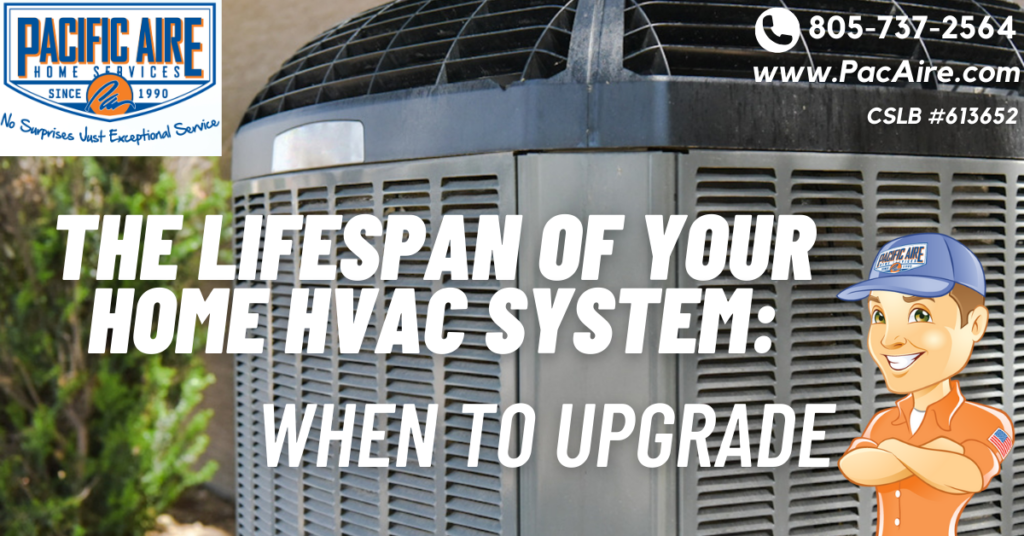
Choosing the right HVAC system is crucial for maintaining comfort, air quality, and energy efficiency for your home. Knowing when to replace your system—and what risks come from delaying replacement—can save you money, prevent breakdowns, and improve your overall living experience. This guide explores system lifespans, factors affecting durability and longevity, and 6 signs your HVAC system needs to be replaced.
How Long Do HVAC Systems Last?
HVAC systems—Heating, Ventilation, and Air Conditioning—cover a variety of units that regulate indoor temperature, airflow, and air quality. While the type and design differ, all these systems share the goal of keeping homes comfortable year-round. Their lifespan depends on system type, usage, maintenance, and environmental factors.
Lifespan for Common Systems:
- Window AC Units:
- Lifespan: Up to 10 years with regular maintenance.
- A smaller, self-contained system with limited components.
- Provides affordable, straightforward cooling for the entire home.
- Mini-Split (Ductless) Systems:
- Lifespan: 12-20 years with regular maintenance.
- Avoids energy losses associated with ductwork.
- Provides zoned comfort and efficiency, allowing you to heat or cool only the spaces you use.
- Standard Whole-Home Systems (Central AC & Furnace):
- Lifespan: Up to 15 years with regular maintenance.
- Works through ductwork to heat or cool the entire home.
- Provides consistent whole-home comfort when ducts and insulation are in good condition.
- Heat Pumps:
- Lifespan: 10–20 years with regular maintenance.
- Transfers heat rather than generating it, ensuring effective heating and cooling for your home.
- Provides both highly-efficient heating and cooling year-round; well-suited to Ventura County’s mild coastal climate.
- Gas Furnaces:
- Lifespan: Up to 25 years with regular maintenance.
- Burns natural gas to generate heat and distribute it through ductwork; a very durable system.
- Provides reliable, high-capacity heating—keeping your home consistently warm.
Factors Influencing HVAC System Lifespan:
Climate & Environment:
Our local Ventura County weather has a significant impact on HVAC durability. For homes along the coast, salt air and humidity slowly corrode outdoor components. Inland homes, on the other hand, may experience greater strain during late-season heat waves, dry air, and dust storms. All of these factors can push your HVAC system to its limit and accelerate wear and tear.
Due to these climate factors, two households on opposite ends of the country may have very different experiences with the lifespan of their HVAC systems. Even seemingly small differences—like airflow around outdoor units or sunlight exposure—can impact system longevity.
Regular maintenance—including professional inspections and filter changes—helps mitigate these environmental effects and ensures the system runs efficiently despite local climate challenges.
Home Efficiency:
How your home is built and insulated matters more than you might think. Drafty rooms, old insulation, or leaky ducts? That’s extra work for your system—and higher energy costs for you. Well-insulated homes with tight seals, modern windows, and good indoor humidity control help your HVAC system run more efficiently, reducing strain and wear.
A few upgrades—such as sealing gaps or installing proper insulation—can keep your system running smoothly while keeping your home cozy with winter warmth inside and summer cool air outside.
Usage Patterns:
How you live in your home changes how long your HVAC system lasts. Even daily habits, such as constantly adjusting the thermostat or setting it to an extreme high or low, can add wear to your system. Even leaving windows open while heating and cooling counts as extra system “stress.”
Systems built for steady, balanced use—like mini-splits or heat pumps—tend to perform better when used thoughtfully, with these stresses in mind.
Maintenance:
Think of maintenance as a spa day for your HVAC. Check air filters regularly, keep vents clear, and schedule annual checkups to catch small issues before they become big headaches. Outdoor units—especially for heat pumps, mini-splits, and central AC—need a little TLC too, to avoid debris, corrosion, or extra strain.
System-Specific Notes:
- Mini-Splits: Skip the ductwork drama and enjoy efficient heating and cooling. Just remember: the outdoor unit still needs some love.
- Central ACs & Furnaces: Longevity depends on healthy ducts, solid insulation, and consistent maintenance.
- Heat Pumps: Perfect for Ventura County’s mild coastal climate, delivering cozy heat in winter and cool relief in summer.
The Bottom Line:
Your HVAC’s lifespan isn’t just about the machine itself. Climate, your home’s efficiency, how you use it, and regular maintenance all play a role. Issues with your home’s infrastructure—like leaky ducts, high indoor humidity, or uneven airflow—can also lead to premature wear and tear. Paying attention to these details helps improve both efficiency and longevity. Treat your system well, and it will keep your home comfortable for years; neglect it, and you could face higher bills, uneven temperatures, or an early replacement.
6 Signs It’s Time to Replace Your HVAC System:
1. Rising Energy Bills:
If your energy costs continue to rise, your HVAC system may be working harder than necessary. Older or inefficient systems often overcompensate for leaky ducts or poor insulation, resulting in higher utility bills.
To determine whether your system is running efficiently, you can compare its SEER, SEER2, and AFUE ratings to current standards. For cooling, check your system’s SEER (Seasonal Energy Efficiency Ratio) and SEER2 ratings—these measure how efficiently your air conditioner or heat pump cools your home. For heating, consider your furnace’s AFUE (Annual Fuel Utilization Efficiency) ratings, which show how efficiently your system can convert fuel into heat. Higher ratings mean your system uses less energy to keep your home comfortable—helping you save on energy costs!
A professional inspection can help you figure out whether high energy bills or uneven temperatures are caused by your HVAC system or your home itself. Technicians can inspect your system’s heating and cooling power, look for leaky ducts or blocked vents, evaluate insulation and windows, and measure airflow and humidity. That gives you a clear picture of how well your home retains heat in winter and cool air in summer. From there, you can decide whether simple repairs, efficiency upgrades, or a full system replacement makes the most sense for your home’s efficiency.
2. Poor Interior Air Quality:
If you notice excess dust, lingering odors, or worsening allergies, your HVAC system may not be filtering or circulating air the way it should. Sometimes the issue comes from your equipment, but other factors—like leaky ducts, poor insulation, or trapped moisture—can also play a role. A professional inspection helps identify the cause.
When the problem lies with your HVAC system, air quality can often be improved through repairs, maintenance, or the use of better filters. Changing or upgrading your filter helps protect your equipment, improve airflow, and reduce allergens—especially helpful for households with respiratory issues, such as asthma or allergies. Filters use MERV (Minimum Efficiency Reporting Value) ratings to measure filtration levels and how effectively they capture airborne particles. The higher the number (on a scale of 1-16), the better the filtration.
- Lower MERV ratings handle larger dust and pollen
- Higher MERV ratings (13–16) can trap finer particles like mold spores
- HEPA (High Efficiency Particulate Air) filters (the equivalent of MERV 17-20) provide near-hospital grade quality of filtration
The challenge is that not every system is designed to handle these higher-rated filters. MERV 13-16 and HEPA filters can severely restrict airflow in older or undersized systems. This extra strain can reduce efficiency and shorten equipment life. If your system can’t support the filtration your home needs, or if it’s already unreliable and nearing the end of its lifespan, replacement may be the better solution.
A modern, high-efficiency system may be able to work with advanced MERV or HEPA filters without sacrificing airflow, allowing your home to benefit from cleaner air, steadier comfort, and improved energy efficiency. Your technician can help you weigh the options—repairing what’s broken, upgrading components like filters, or installing a newer, higher-efficiency system that supports higher-rated MERV or HEPA filters.
3. Frequent Repairs:
Requiring more service calls than usual is a strong indication that your HVAC system is nearing the end of its lifespan. A good rule of thumb: if annual repair costs exceed 50% of the cost of a replacement system, it’s often more cost-effective to replace the unit.
4. Discomfort in Your Home:
Rooms that never feel the right temperature or drafty spots around the home may indicate your system can’t keep up. Even if the system itself is fine, issues with ductwork or zoning can cause uneven temperatures. A replacement, paired with improved insulation or sealing, can resolve uneven comfort.
5. Outdated Technology:
Older air conditioners and heat pumps that use R-22 refrigerant are costly to maintain, since production ended in 2020 and reclaimed supplies are limited. These systems can’t simply be refilled with modern refrigerants, so replacement is usually the most practical choice. Today’s options include units with R-410A (manufactured through early 2025) or new models designed for next-generation, eco-friendly refrigerants—both offering greater efficiency and reliability compared with aging equipment.
6. Aging HVAC System:
Even without major failures, a system nearing the end of its expected lifespan usually shows declining performance. Upgrading before a breakdown ensures steady comfort and lower energy use.
A Final Word
Knowing when to replace your HVAC system is essential for maintaining a comfortable and efficient home. By recognizing the signs of decline and understanding the factors that affect system lifespan, you can make confident decisions about upgrading to modern options like electric air-source heat pumps. These systems deliver reliable comfort, improved air quality, and long-term energy savings—especially when paired with proper maintenance and home efficiency improvements. Ready to explore your options? Schedule an appointment with Pac Aire today and take the first step toward a more comfortable home.